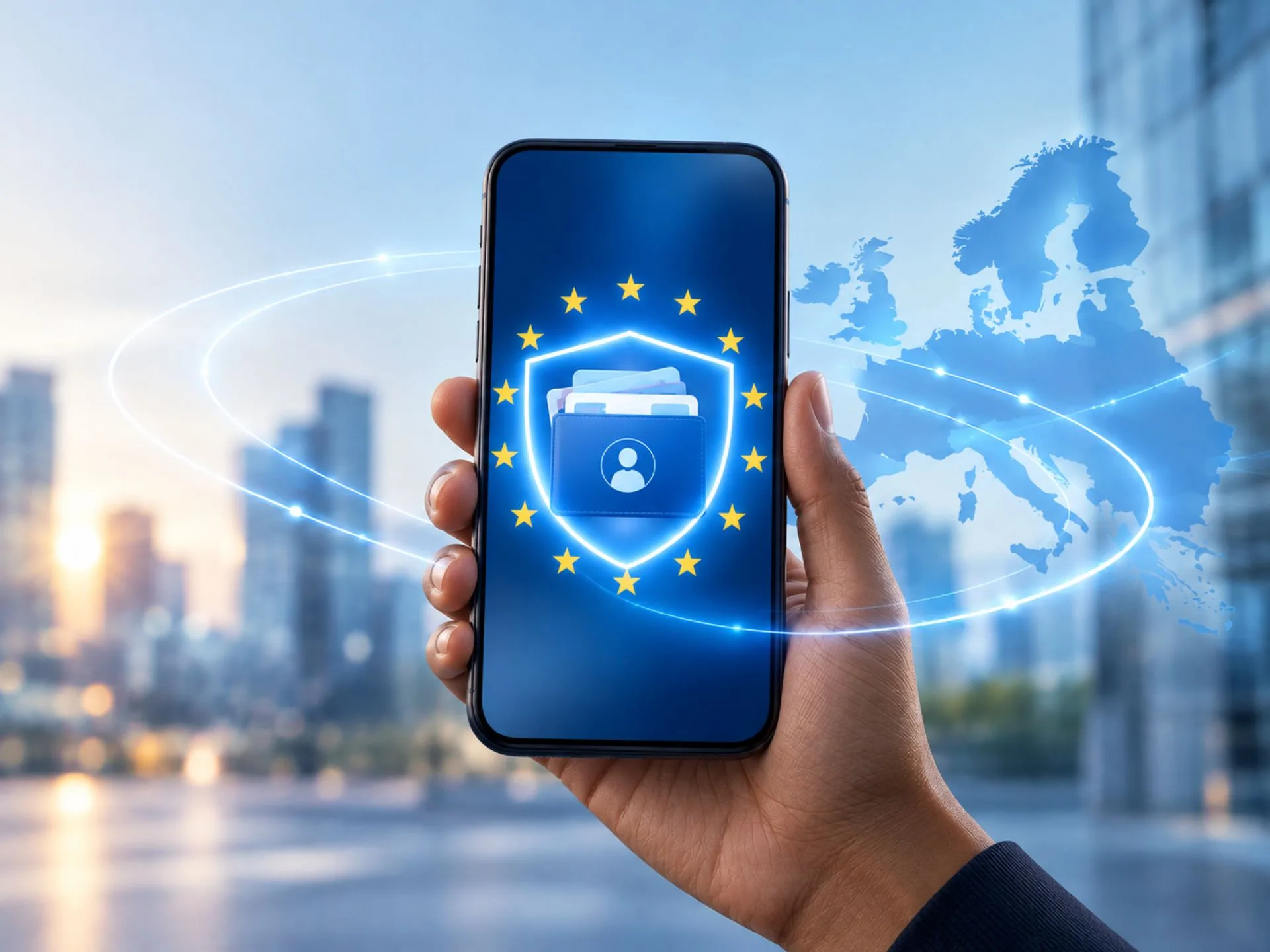
Digital identity will play an increasingly important role in interactions between businesses, citizens, and online services in the coming years. But for it to truly simplify user experiences, it must be based on recognized, interoperable mechanisms that are reliable enough to function beyond the scope of a single service or national market.
The European digital identity wallet (EUDI Wallet) is part of this approach. Its goal is not limited to offering a new way to identify oneself online: it paves the way for new uses that allow users to manage and share various types of information or supporting documents within a common framework, thereby enabling them to conduct digital transactions securely, seamlessly, and in a traceable manner.
For businesses, this evolution raises new questions. How can these new means of identification be integrated into existing customer journeys? What new use cases might emerge around the sharing of attributes and supporting documents? And above all, how can we ensure that these interactions remain simple, secure, and recognized throughout Europe?
Beyond the wallet itself, a broader trend is emerging: that of a common foundation capable of facilitating trusted digital interactions between users, businesses, and services on a European scale, according to the 2026 European Digital Trust Barometer conducted by Namirial in collaboration with Xerfi, which surveyed more than 700 decision-makers in France, Italy, Spain, and Germany.
A common model of trust is emerging in Europe
While European companies are not always advancing at the same pace in their digital transformation, their expectations tend to converge when it comes to building digital trust. Behind the differences in maturity and national priorities, the need to rely on common mechanisms is gradually emerging.
The Barometer’s results illustrate this convergence. The GDPR remains the most influential regulation in all four countries, cited by 89% of decision-makers in France, 87% in Germany, 84% in Italy, and 70% in Spain. The European origin of solutions is also an important selection criterion across all markets: 67% in Italy, 61% in France, 59% in Germany, and 58% in Spain.
Data sovereignty and protection also emerge as major strengths of European solutions in all four countries. Common benchmarks are thus emerging around compliance, data control, and the origin of the solutions.
This convergence reflects a simple reality: digital interactions are increasingly transcending the boundaries of a single company, sector, or country. A verified identity, a document, or digital information must be usable in different contexts without requiring trust to be rebuilt with every new transaction.
This shared logic does not mean that all markets will adopt the same practices or move at the same pace. Rather, it lays the groundwork for the development of digital services capable of working together on a European scale.
The European wallet is very much part of this evolution. But to understand what it can truly change, we must first examine why digital interactions today need a common foundation.
Why do digital interactions need a common foundation?
Today, a single person may be required to prove their identity, authenticate themselves, or provide supporting documents multiple times with the same company – or several times a day – depending on the services they use. Each organization has its own processes, its own requirements, and its own verification mechanisms.
This fragmentation can complicate user experiences, but it also raises questions of trust, convenience, and minimizing friction. When information has already been verified in a trusted environment, does it necessarily need to be re-verified with every interaction?
For businesses, the benefit therefore lies not only in simplifying identification. Such an environment can also help streamline user journeys, reduce certain repetitive verifications, and facilitate and enhance the reliability of transactions and interactions between businesses and citizens.
It is within this framework that the European digital wallet takes on its full meaning: providing users with a way to manage their digital identity and various attributes so they can use them, when necessary, with services that can recognize them, while retaining control and ensuring the traceability of the data transmitted. Furthermore, this helps guarantee the reliability of the data transmitted – a significant advantage.
The EUDI wallet: a new way to manage your digital identity
The European wallet marks a significant shift in how we approach digital identity. Rather than having to juggle multiple usernames and verification processes depending on the services used, users have access to an environment that allows them to present their identity or specific information when necessary.
The key benefit lies in the control granted to the user. Depending on the context, this does not necessarily mean sharing all information associated with their identity, but only what is required to access a service or complete a transaction.
This approach can transform certain digital workflows. A company could thus rely on digital information or supporting documents from recognized sources, rather than systematically asking the user to provide new documents that it must verify or to repeat certain verification steps.
The wallet is therefore not simply a new way to identify oneself. It can become a gateway to various elements that can be used during a digital interaction, with the goal of making their presentation simpler and their verification more reliable.
From identity to attributes: toward new uses
One of the main changes introduced by the wallet is the ability to go beyond simple identification. In many situations, a service does not need to know a person’s full identity; rather, it needs to be able to verify a specific piece of information.
This could involve, for example, confirming an age, a qualification, a degree, a permit, etc. The user can then present the proof or attribute necessary for their transaction, without having to systematically provide more information than is required.
For businesses, this development may change the way certain processes are designed. Rather than requesting a document, extracting the information from it, and then verifying it, they can gradually rely on digital data or supporting documents whose origin and authenticity have been verified.
This approach paves the way for more direct interactions between the party issuing the information, the party holding it, and the organization responsible for verifying it. It can thus simplify certain exchanges while strengthening control over shared information and the security of digital transactions.
But for these new practices to function beyond a single service or country, the various stakeholders must be able to recognize and use the same mechanisms. This is where interoperability becomes crucial.
Interoperability at the heart of the European model
For the digital wallet to truly simplify digital transactions, its use cannot remain limited to a few isolated services or environments. Its value depends largely on the ability of the various stakeholders to recognize and use the information presented within it.
Interoperability is precisely what enables this continuity. A digital identity, attribute, or credential must be usable across different services, even when the user and the organization are located in different European countries.
For businesses, the stakes are high. Integrating the digital wallet involves more than simply adding a new means of identification to an existing user journey. It also requires the ability to receive, verify, and utilize information from a broader ecosystem, in accordance with common rules and standards.
However, the Barometer’s findings show that interoperability still lags behind among the operational foundations of digital trust. It is cited by 26% of decision-makers in France, 25% in Germany, and 33% in Spain, and ranks last among the three pillars of trust in three of the four countries studied.
This approach can help reduce the fragmentation of digital experiences in Europe. Rather than rebuilding trust mechanisms specific to each service or market, organizations can gradually rely on a common, secure framework.
Adoption: technology alone will not be enough to build trust
The mere availability of a European wallet does not, in and of itself, guarantee its adoption. And the Barometer’s findings show that European companies do not yet all place the same importance on it.
In Germany and Spain, 61% of decision-makers surveyed believe that the European wallet will play an important role in combating cyber threats. This proportion reaches 55% in Italy, while opinions in France appear more divided: 49% attribute an important role to it, compared to 51% who anticipate a limited role or none at all.
For citizens, this trust depends in particular on the ability to know what information is being requested, for what purpose, and with whom it is shared. Control over the data provided thus becomes just as important as the simplicity and speed of transactions.
From a business perspective, other questions arise: How can these new mechanisms be integrated into existing services? How can the information received be verified? And how can a sufficiently seamless experience be maintained while meeting security and compliance requirements?
Adoption will therefore depend as much on the quality of the proposed use cases as on the infrastructure that makes them possible. A system that is technically reliable but difficult to understand or integrate risks limiting the expected benefits.
The real challenge will thus be to transform the wallet into a tool that is widely used and recognized in everyday interactions. This is an essential step in moving from a shared infrastructure to a true ecosystem of trust.
From the wallet to a true ecosystem of trust
The wallet cannot function in isolation. For it to bring real value to digital transactions, it must be part of an environment where different trust mechanisms can work together.
Digital identity, authentication, attributes, supporting documents, electronic signatures, and—more broadly—trust services address different needs throughout a user journey. Their integration creates continuity between user identification, information verification, and the completion of a digital action or transaction.
This approach changes the way we think about digital trust. Rather than rebuilding verification mechanisms at every step, companies can gradually rely on a set of services and information recognized within a common framework.
The wallet thus becomes a component of a broader ecosystem, in which users, businesses, and service providers can interact based on shared and interoperable mechanisms.
The challenge, therefore, goes beyond the deployment of a new digital identity tool. It involves creating the conditions that allow different trust services to work together and support new use cases on a European scale.
Toward a new digital trust infrastructure in Europe?
For businesses, this evolution could gradually change the design of many user journeys. Identification, data sharing, verification of supporting documents, and the completion of transactions will increasingly rely on common mechanisms, rather than on a series of checks and verifications specific to each service, user journey, and transaction.
The success of this model will, however, depend on its ability to balance several requirements: interoperability, security, data control, and ease of use. Only then can a common framework truly facilitate interactions between citizens, businesses, and services across Europe.
The digital wallet thus appears less as an end in itself and more as one component of a broader trust infrastructure. The differences observed in the Barometer show that European markets do not all start from the same point when it comes to its adoption. But the common ground regarding security, compliance, data sovereignty, and the European origin of solutions is already laying the foundation upon which these new use cases can gradually be built.
To find out how companies in France, Germany, Italy, and Spain view the pillars of digital trust and the capabilities they consider a priority for the coming years, check out Namirial’s 2026 European Digital Trust Barometer.