Digital trust is gradually emerging as a key driver of transformation for European businesses. From security and compliance to data sovereignty, artificial intelligence, and the fight against fraud, organizations today must balance the rapid growth of digital adoption with effective management of new risks.
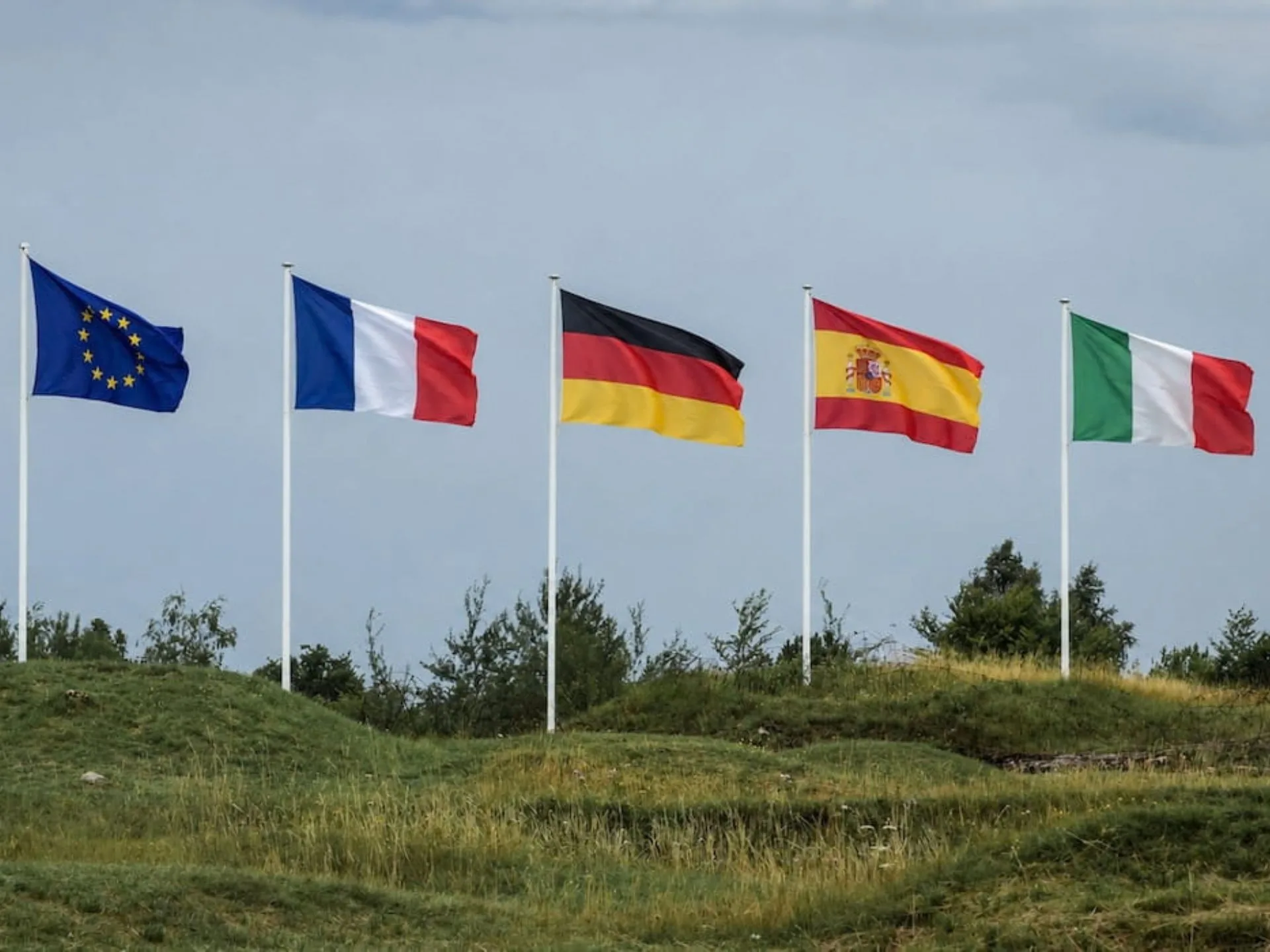
For its second edition, the Digital Trust Barometer, conducted in partnership with Xerfi, expands its analysis to Europe. Based on a survey of 700 decision-makers from SMEs and large enterprises in France, Germany, Italy, and Spain, the study uses a common methodology to compare the perceptions, practices, and priorities of four major European markets.
This comparison reveals one key finding: while certain fundamentals of digital trust are widely shared, European companies are not progressing at the same pace and do not necessarily have the same priorities.
Is there, then, a common European vision of digital trust, or do national specificities continue to shape distinct trajectories?
A Common Foundation for Digital Trust Is Emerging in Europe
From one country to another, European companies do not necessarily approach digital trust with the same priorities. However, several common requirements are emerging, particularly regarding regulation, data sovereignty, and the selection of technology partners.
The GDPR remains a major point of reference. It is cited by 89% of decision-makers in France, 87% in Germany, 84% in Italy, and 70% in Spain. Despite differences between markets, data protection therefore remains deeply embedded in the way European companies build their trusted digital environments.
This focus on data extends to the selection of technology solutions. Between 58% and 67% of decision-makers consider the European origin of their suppliers to be a priority criterion, with this factor being particularly important in Italy and France. The location and environment in which data is processed thus become integral elements of the relationship of trust.
Data protection and data sovereignty are also among the main benefits associated with European solutions in all four markets.
A common foundation therefore appears to be taking shape at the European level: protecting data, operating within a trustworthy regulatory framework, and gaining greater control over one’s technological environment.
But sharing the same fundamentals does not mean moving forward at the same pace. It is precisely in their implementation that the differences between the four markets become most apparent.
A Shared Ambition, but Four Levels of Maturity
Sharing certain fundamentals does not, however, mean that digital transformation is progressing uniformly across Europe. Levels of digitization—particularly of processes—reflect the unique pace of transformation in each country.
France, Italy, and Spain are at relatively similar levels, with an average of 3.9 digitized processes per company in France, 4.1 in Italy, and 4 in Spain. Germany stands out with a lower average of 3.1 digitized processes.
But digital maturity is not measured solely by the number of processes already digitized. Priorities are shifting: it is no longer just a matter of digitizing as much as possible, but also of securing transactions, better managing data, and optimally connecting existing systems to avoid “blind spots.”
The obstacles encountered can also slow down this transformation. While budget constraints are a common challenge, legacy systems and regulatory complexity vary in significance from one country to another.
Digital transformation is therefore progressing at different paces across Europe. These differences in maturity also influence how companies define what a “trusted digital environment” means to them.
Digital trust does not mean the same thing in every country
Beyond their level of maturity, the very concept of digital trust varies by country, depending on companies’ concerns and priorities.
In France, it remains strongly associated with compliance and data protection. In Italy, the relational dimension takes on greater importance, with customer trust and reputation at the forefront. In Germany, data-related issues play a more central role.
Spain takes a more cross-functional approach, where customer relations, compliance, and transparency intersect. It also stands out for its more strategic, long-term vision, in which digital trust is viewed as a driver of growth and competitiveness, going beyond mere compliance requirements.
These differences have very concrete consequences. Depending on what they associate with the concept of trust, companies will not necessarily seek to build the same capabilities or direct their investments in the same way.
A European foundation thus appears to coexist with several national visions of digital trust. This diversity is particularly evident when a new technology, such as artificial intelligence, enters the equation.
AI: Adoption Alone Is Not Enough to Build Trust
Artificial intelligence serves as a good indicator of these different approaches. Greater use of AI does not necessarily mean a greater willingness to trust it, especially when it is involved in critical processes.
France and Spain have the highest levels of AI adoption, at around 68 to 70 percent, ahead of Germany and Italy, at around 54 to 55 percent. However, the ranking reverses when it comes to reliability: 42% of French decision-makers consider AI reliable for critical processes, compared to 47% in Spain, 49% in Italy, and 52% in Germany.
The concerns also differ. In France, data privacy is the top concern. In Germany and Italy, dependence on non-European suppliers is a greater source of concern, while in Spain, the loss of human control is a more significant issue.
The question, therefore, is no longer simply whether European companies will adopt AI, but under what conditions they will be willing to trust it. Reliability, data control, technological autonomy, or human oversight: expectations differ, but all reflect the same need to establish a framework for its integration.
AI thus serves as a barometer of the various European conceptions of digital trust: adoption may progress rapidly, without trust evolving at the same pace.
Fraud, Regulation, and Sovereignty: European Challenges, Different Perceptions
Beyond new technologies, digital trust also depends on companies’ ability to address threats, protect their data, and maintain control over their digital environment. On these issues, common concerns are emerging, despite sometimes starkly contrasting perceptions of risk.
Fraud is a particularly clear example of this. 72% of Italian decision-makers, 64% of French decision-makers, and 59% of Spanish decision-makers report having observed an increase in fraud attempts over the past twelve months, compared to only 36% in Germany. It is also important to note that phishing and identity theft rank among the top threats in all four countries.
At the same time, companies must navigate a demanding and rapidly evolving regulatory landscape, as well as growing concerns about data control. Digital sovereignty is directly tied to this discussion: the origin of suppliers, the location of data, and the safeguards offered by European solutions are becoming key criteria to consider in technology choices.
Security, compliance, and sovereignty are thus becoming increasingly intertwined. Protecting a digital interaction is no longer just about preventing fraud or meeting a regulatory requirement, but also about scrutinizing the actors, infrastructure, and technologies that a company chooses to trust.
These challenges are European in scope, but their intensity and the responses to them remain specific to each market. This diversity is also reflected in the strategies that companies are beginning to outline for the coming years.
Toward a More Strategic Approach to Digital Trust by 2028?
These contrasts extend to how companies envision the future. Looking ahead to 2028, not all companies yet assign the same role to digital trust in their strategies.
In France, Germany, and Italy, it remains primarily associated with regulatory compliance. Spain stands out more: 60% of decision-makers there associate digital trust with growth and competitive advantage, compared to 38% who associate it with compliance.
Planned investments also reflect different priorities. Transaction security stands out in France, data governance in Germany, and interoperability and connectivity in Italy, while Spain places greater emphasis on AI and automation.
These trends raise a broader question for the coming years: Will digital trust remain primarily a response to security and compliance requirements, or will it gradually become a driver of transformation, competitiveness, and growth?
At this stage, Europe does not appear to be heading toward a single answer. Rather, the four markets are charting several paths toward the same goal: creating digital environments that are reliable, secure, and capable of supporting innovation.
Digital Trust in Europe: Key Takeaways
A common trend is emerging in Europe, but digital trust has not yet settled on a single trajectory. The countries studied share certain requirements regarding data protection, regulation, and sovereignty, while exhibiting different levels of maturity and priorities.
Process digitization, artificial intelligence, fraud, data governance, and technology choices: each market is striking its own balance between transformation, risk management, and trust.
This diversity does not prevent the emergence of a shared ambition. As digital practices evolve, trust is becoming an essential prerequisite for enabling European companies to continue transforming, securing their interactions, and adopting new technologies.
To learn more and explore the full dataset, comparisons between France, Germany, Italy, and Spain, as well as the outlook through 2028, please consult the full study.
[CTA — Download the 2026 European Digital Trust Barometer]